


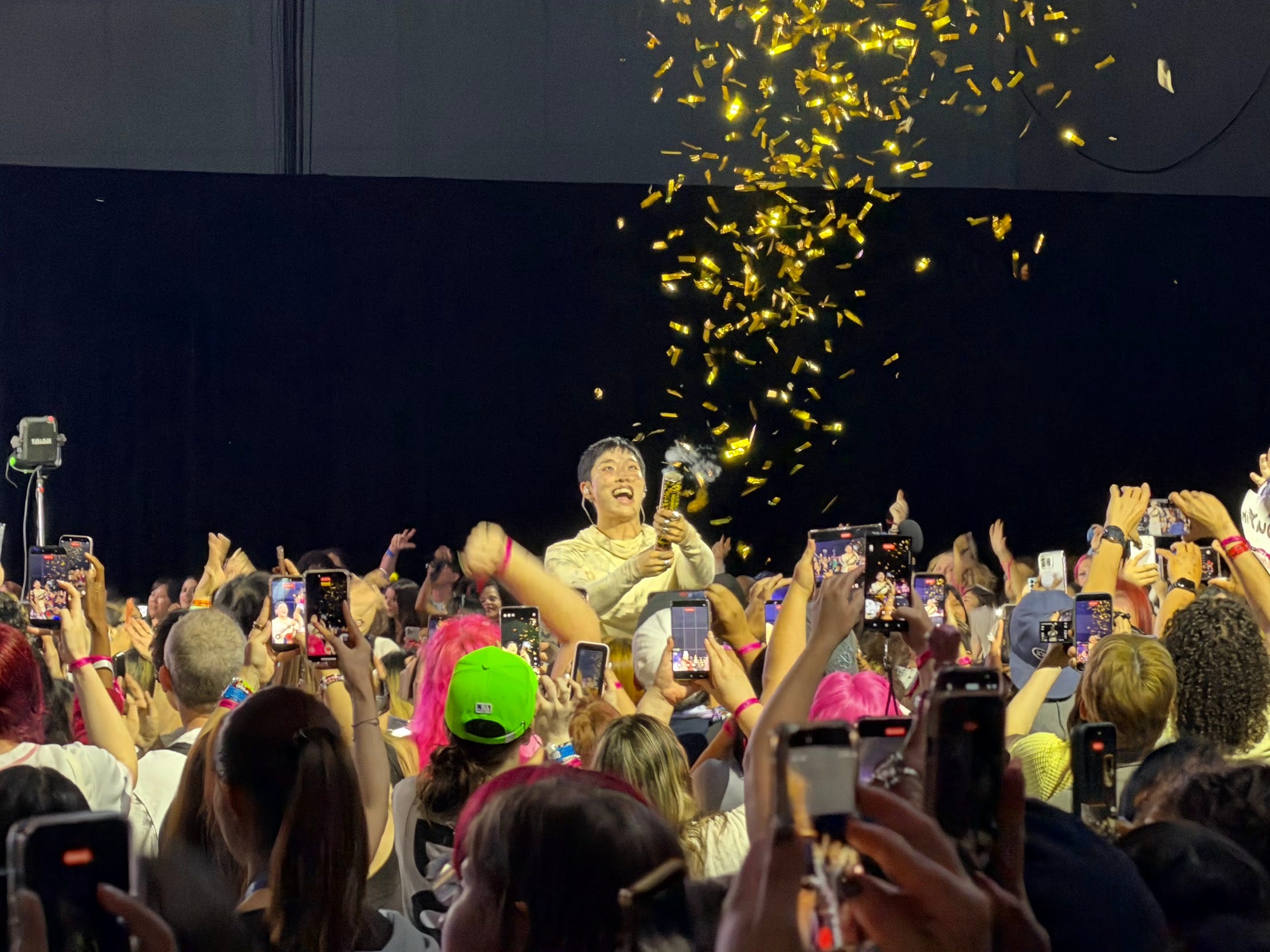
For a few years now I’ve been going to one of my favorite community events, KCON in Los Angeles. The thing that struck me at the most recent one had nothing to do with the music.
In previous years the whole thing felt centered on K-pop, which makes sense, because that’s what most people are buying a ticket for. K-pop was still clearly the draw, and the convention around it had been deliberately widened. There was programming and floor space given over to K-dramas and broader Korean content, to K-beauty, to Korean food, and to Korean culture more generally. I wasn’t reading that into the layout, either. During some of the MC segments they said it directly, that they wanted people to leave more interested in Korean culture than they arrived.
So somebody sat down and decided what a person who came for one artist was going to walk past on their way through the building.
The obvious lesson would be that KCON cross-sells well, which is both true and boring. The more useful observation is that the ecosystem created the conditions for someone’s interest to widen, by putting adjacent things in front of people who already had a reason to trust the setting they were standing in. Nobody had to be persuaded that Korean culture was worth their attention. They had already bought a ticket. All that remained was whether the next thing was visible or not.
There’s a version of this in B2B that I don’t think gets designed on purpose very often.
A customer enters through one team, one use case, one problem they needed solved this quarter. Then they show up in the community, and what happens next depends almost entirely on what’s in front of them there. If the only thing visible is more material about the use case they already have, they’ll get better at that one thing, which is fine. If they come across people using the product in ways they hadn’t considered, some of that will stick, and a portion of it will turn into a conversation with a colleague on a different team.
None of that is mysterious. It’s a set of fairly ordinary decisions that somebody either made or didn’t: what the welcome sequence actually says, which conversations get surfaced rather than buried under whatever was posted most recently, what the event calendar covers across a quarter, which groups a new member is shown on the way in, what goes into the digest, and who gets introduced to whom. Each one is a small choice about what a person encounters. Together they determine whether somebody who arrived for one thing ever finds out the other things exist.
It’s worth saying that adjacency isn’t automatically a gift. Someone who discovers three things their team can’t fund, or that would need buy-in from a sibling team they don’t have, may come away more frustrated than when they arrived. Showing people what other customers are doing is also showing them what they aren’t getting, which is worth weighing when you decide what to put in front of whom.
The question I’d want to ask about my own program, and the one I’d ask a client, is this: if somebody arrives through one entry point, what do they come across next, and did anyone decide that or did it just happen?
Korean culture isn’t a company, obviously. It’s a great many creators, brands, and institutions with different and sometimes competing interests, and whatever got decided inside that convention center doesn’t extend to any of them. The deliberateness I saw was KCON’s, and that’s the part I’m borrowing.
Try this
Take one customer who joined your community in the last six months through a single use case, and trace what they’ve actually encountered since, meaning what they’ve plausibly seen rather than everything that was technically available to them. Then ask whether that path was designed by anyone, or whether it’s just the shape your program happened to take. If the answer is that nobody chose it, Why One Community Format Will Never Reach Everyone is where I’d start, because what somebody encounters next is mostly a function of which formats and layers exist for them to encounter at all.